← Back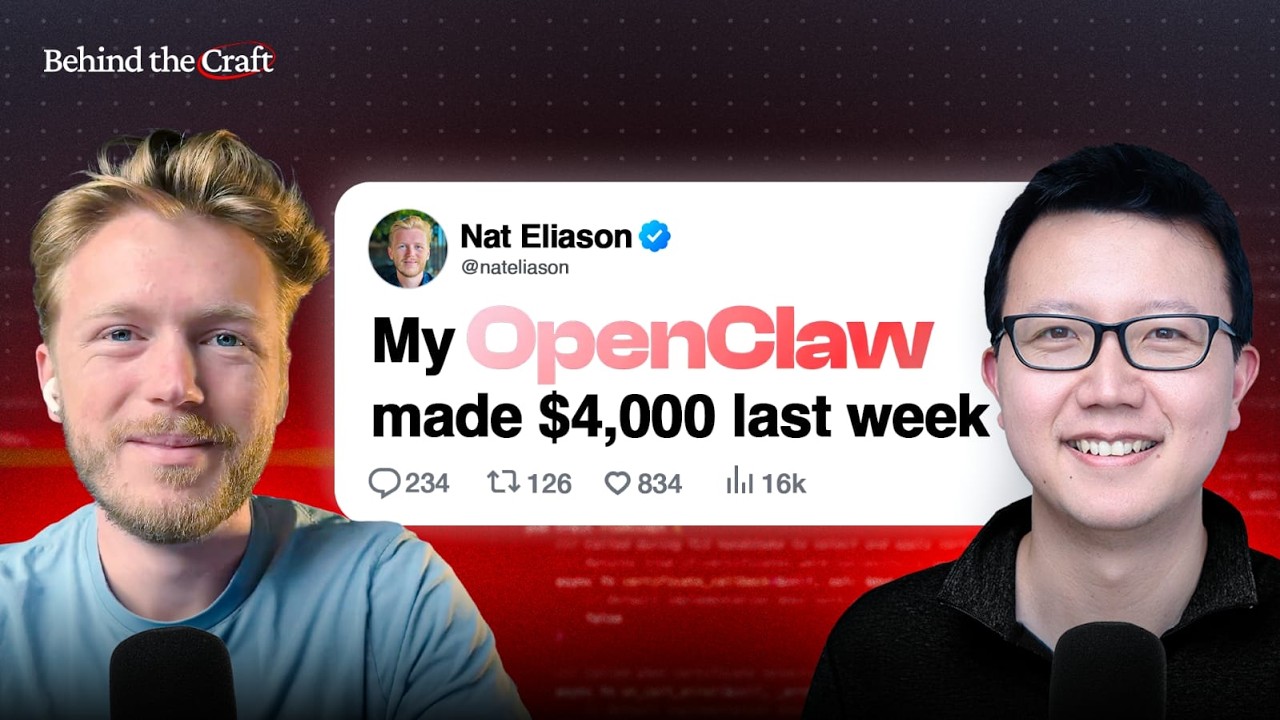
YouTube/Peter Yang
Use OpenClaw to Build a Business That Runs Itself in 35 Min | Nat Eliason
View original
openclawagent workflows
Agent Instructions
agent prompt
// These are key takeaways from “Use OpenClaw to Build a Business That Runs Itself in 35 Min | Nat Eliason” (source). Use this guide to see how this could fit into our workflow and tell me what could work, what we do differently, and how we might adopt any of this into our current workflow.
# Building an Autonomous AI Business Agent

## Context
This content details how to evolve a basic AI agent (OpenClaw/Claude) into a highly autonomous business agent capable of building products, managing finances, and interacting on social media, emphasizing practical steps and security considerations.

## Principles
- **Progressive Autonomy:** Grant access and responsibility incrementally, starting with isolated environments.
- **Memory as Foundation:** A robust, searchable memory system is critical for long-term effectiveness and context retention.
- **Proactive Monitoring:** Agents should actively monitor their own long-running tasks and report on progress/completion.
- **Security by Design:** Differentiate between authenticated command channels and informational input to prevent prompt injection and unauthorized actions.
- **Bottleneck Elimination:** Continuously identify and automate tasks that require human intervention to increase agent independence.

## Implementation Patterns
- **Multi-threaded Communication:** Use group chats (e.g., Telegram) to enable parallel project management without context overlap.
- **Delegated Programming:** For complex coding tasks, delegate to specialized tools (e.g., Codex) and have the agent monitor their execution.
- **Automated Memory Consolidation:** Implement daily cron jobs to review chat sessions, update knowledge bases, and re-index for quick retrieval.
- **Dedicated Accounts/Keys:** Provide the agent with its own API keys, social media accounts, and financial accounts (e.g., Stripe, crypto wallet) separate from personal ones.
- **Heartbeat for Task Management:** Configure the agent's "heartbeat" to check on active projects, restart failed processes, and report completed work.

## Configuration Suggestions
- **QMD for Memory Indexing:** Replace default memory search with QMD (Markdown indexing) for faster and more reliable knowledge retrieval.
- **Tiago Forte PARA System:** Structure the agent's knowledge base using a system like PARA (Projects, Areas, Resources, Archives) within a dedicated repository.
- **Daily Note System:** Implement a daily note where the agent logs active projects and progress, checked by the heartbeat.
- **Cron Jobs for Proactivity:** Set up scheduled cron jobs for tasks like social media checks, content generation, and memory consolidation.
- **Crypto Wallet Integration:** For financial autonomy, integrate a dedicated crypto wallet for the agent to manage funds and transactions.

## Warnings
- **Avoid Full Access Initially:** Do not grant your AI agent unfettered access to all your personal or production accounts from the start.
- **Beware of Prompt Injection:** Be vigilant about external inputs (e.g., social media mentions, emails) as potential prompt injection vectors; ensure the agent differentiates these from authenticated commands.
- **Don't Rely on Default Memory:** The default memory systems of many AI agents are insufficient for complex, long-term projects; customize and enhance them.
- **Monitor Financial Autonomy Closely:** While enabling crypto autonomy is powerful, closely monitor transactions and set safeguards, especially in early stages.
- **Understand Tool Limitations:** Recognize that agents may struggle with tasks requiring complex web form interactions; prioritize code-based integrations where possible.
Human Summary
- Start with Memory First: Before granting extensive API access, prioritize setting up a robust memory system for your AI agent. This ensures early conversations and learnings are retained and immediately useful, preventing the loss of valuable context.
- Gradual Autonomy & Risk Control: Don't give your AI agent full access to all your accounts at once. Start with a single, isolated API (e.g., a dedicated GitHub account or a new Stripe account with limited permissions) and gradually expand its capabilities as it proves reliable.
- Leverage Group Chats for Parallel Work: Utilize Telegram group chats (or similar multi-threaded communication) to allow your AI agent to manage multiple, distinct projects simultaneously without context pollution. Each thread acts as a separate session.
- Proactive Heartbeat & Delegation: Configure the AI's "heartbeat" to actively monitor long-running tasks (especially programming jobs delegated to tools like Codex). This ensures tasks are completed, restarted if failed, and reported upon completion, reducing manual oversight.
- Authenticated vs. Information Channels: Implement a clear distinction between authenticated command channels (e.g., your direct Telegram chat) and information channels (e.g., Twitter mentions, emails). This prevents prompt injection and unauthorized actions from external sources.
- Automate Bottleneck Removal: Continuously ask, "Can I remove this bottleneck for you?" This mindset drives the automation of repetitive tasks and the granting of necessary permissions, leading to a more autonomous and capable agent.
- Crypto for Agent Autonomy: Consider using crypto rails for agent payments and transactions. This can be more efficient for AI agents than traditional web forms and credit cards, as it's code-based and aligns with an agent's capabilities.